Google BIPA Settlement Illinois

Understanding the Illinois biometric privacy case involving Google, who was potentially affected, and why biometric privacy laws became important

This page is for informational purposes only and does not constitute legal advice.

What Was the Illinois Google Biometric Privacy Settlement

The Illinois Biometric Information Privacy Act, commonly known as BIPA, was signed into law on October 3, 2008, making Illinois the first state in the United States to enact major biometric privacy legislation. The law was designed to protect Illinois residents from the unauthorized collection and use of their biometric data - unique physical identifiers that, unlike passwords, cannot be changed if compromised.

In March 2016, plaintiffs Lindabeth Rivera and Joseph Weiss filed class action lawsuits against Google in federal court, alleging that the company's Google Photos Face Grouping feature violated BIPA. Rivera was not even a Google Photos user - a friend uploaded photos of her, and Google's system automatically extracted and stored her facial geometry without her knowledge or consent. The case moved to Cook County Circuit Court after a federal dismissal over standing issues, and in April 2022, Judge Anna M. Loftus granted preliminary approval to a $100 million settlement. Final approval came September 28, 2022. Payments of approximately $95.38 per person began reaching the 687,484 Illinois residents who filed valid claims on July 7, 2023.

Who Was Potentially Affected by the Google BIPA Case

Any Illinois resident whose face appeared in a photo stored in Google Photos between May 1, 2015, and April 25, 2022, was potentially a class member - regardless of whether they personally used Google Photos. This included people photographed by others, reflecting BIPA's broad consent requirements that extend to non-users. The settlement class ultimately encompassed 687,484 valid claimants, far exceeding initial projections of around 280,000.

What Biometric Data Means

Biometric data refers to unique physical or behavioral identifiers - such as facial geometry, fingerprints, iris scans, and voiceprints - that can be used to identify an individual. Under Illinois BIPA, these identifiers receive special legal protections because, unlike passwords, they cannot be reset if compromised.

What Illinois BIPA Covers

The Illinois Biometric Information Privacy Act covers any private entity that collects, stores, or uses biometric identifiers from Illinois residents. Companies must provide written notice, specify the purpose and duration of collection, and obtain written consent before collecting any biometric data. BIPA also prohibits selling or profiting from biometric information.

Why Biometric Privacy Became a Legal Issue

Facial recognition technology expanded rapidly in consumer applications without adequate regulation. When companies like Google began automatically extracting facial geometry from uploaded photos without user knowledge, Illinois residents gained the legal standing to challenge these practices under BIPA. The 2019 Rosenbach ruling confirmed that even a technical BIPA violation - without proof of harm - is enough to bring a lawsuit.

Background of the Google Settlement

Rivera v. Google LLC was consolidated in Cook County Circuit Court (Case No. 2019-CH-00990) before Judge Anna M. Loftus. The five class representatives - Azzano, Marquez, Molander, Rivera, and Weiss - alleged Google's Face Grouping feature violated BIPA. Google agreed to $100 million without admitting liability, with final approval granted September 28, 2022.

Biometric Privacy Basics

Understanding the core concepts behind biometric privacy helps clarify why laws like BIPA were needed and how they protect Illinois residents in an era of expanding digital surveillance and facial recognition technology.

Facial Recognition Technology
Biometric Identifiers
Consent Requirements
Data Storage Concerns
Privacy Rights Under Illinois Law

Why the Google BIPA Case Mattered

  • Increased public awareness of biometric privacy - The case brought mainstream attention to how technology companies collect facial data from ordinary photos, prompting millions of Illinois residents to evaluate their digital privacy.
  • Greater focus on transparency and consent - The settlement required Google to update its face model policies and established that companies must proactively disclose biometric data collection, not just bury consent in terms of service.
  • Influence on future privacy discussions - The $100 million settlement, while smaller than Facebook's $650 million BIPA settlement, reinforced the message that biometric privacy violations carry serious financial consequences for technology companies.
  • Importance of understanding digital data collection - The case demonstrated that even non-users of a service can have their biometric data collected when others upload their photos, expanding the understanding of who is protected under BIPA.
Google biometric privacy settlement Illinois overview - person using smartphone facial recognition feature
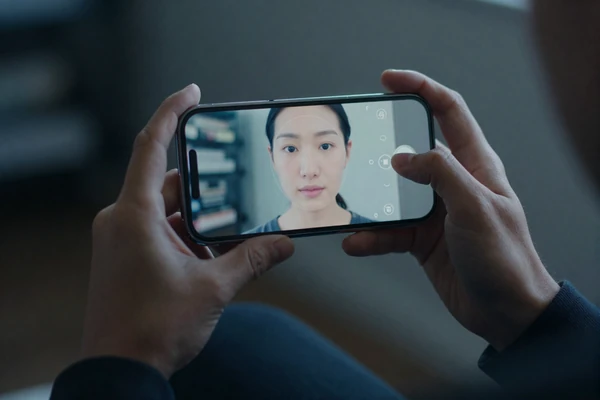
Facial recognition features in consumer apps prompted Illinois residents to examine their biometric data rights.
Biometric privacy and facial recognition concept without text - abstract digital mesh face pattern
Biometric identifiers like facial geometry are unique data points that cannot be changed if exposed.

Google BIPA Settlement Timeline

2008

BIPA Enacted in Illinois

Governor Rod Blagojevich signs the Illinois Biometric Information Privacy Act on October 3, 2008 - the first major biometric privacy law in the United States.

2015

Privacy Concerns Emerge

High-profile class action lawsuits against Facebook, Shutterfly, and other tech companies bring biometric data collection into mainstream public discourse.

2016-2019

Legal Proceedings - Rivera v. Google

Lindabeth Rivera files suit in March 2016 over Google Photos Face Grouping. The federal case is dismissed in December 2018 for lack of Article III standing. Plaintiffs move to Cook County Circuit Court.

April 2022

$100M Settlement Announced

Cook County Judge Anna M. Loftus grants preliminary approval to the $100 million settlement. The claims period opens for Illinois residents to file.

September 24, 2022

Claims Deadline

687,484 valid claims are filed by the deadline. Final approval of the settlement is granted on September 28, 2022.

July 7, 2023

Payments Begin

Payments of approximately $95.38 per person begin reaching Illinois claimants, following the June 2, 2023 court order for distribution.

Key Concepts in Illinois Biometric Privacy Law

Biometric Identifier
A biometric identifier is a unique physical or behavioral characteristic used to identify a person. Under BIPA, this includes retina/iris scans, fingerprints, voiceprints, scans of hand or facial geometry, and DNA. Photographs are explicitly excluded, but geometric data derived from photographs is included.
Biometric Information
Biometric information is any information based on a biometric identifier that is used to identify an individual, regardless of how it is captured, converted, stored, or shared. It includes face templates, fingerprint templates, and similar derived data - and is subject to all BIPA protections.
Consent
Before collecting biometric data, a company must inform the individual in writing, explain the purpose and retention period, and obtain written consent. Since August 2024, electronic signatures qualify as written consent under BIPA's 2024 amendment (SB 2979).
Privacy Notice
BIPA requires companies to publish a publicly available written policy establishing a retention schedule and guidelines for permanently destroying biometric data. The notice must be given before any collection takes place - not buried in a general terms of service agreement.
Data Retention
Companies must destroy biometric data when the original purpose for collection has been fulfilled, or within three years of the individual's last interaction - whichever comes first. As part of the Google settlement, Google agreed to purge face models from inactive accounts after two years.
Illinois BIPA Key Concepts - Quick Reference
Topic What It Means Why It Matters Common Question
Biometric data Unique physical identifiers (face, fingerprint, iris) Cannot be changed if exposed - permanent privacy risk What data is included under BIPA?
Consent Written permission before collection Legal compliance and user autonomy Why does consent matter so much?
Retention How long data can be stored Limits ongoing privacy risk after collection ends How long can companies keep my data?
Privacy rights Legal protections under BIPA Gives individuals control over their data What rights do Illinois residents have?
687,484
Illinois residents filed valid Google Photos BIPA claims
$650M
Facebook BIPA settlement - the largest all-cash privacy settlement in US history at the time
2008
Year Illinois enacted the first major biometric privacy law in the United States
"Understanding biometric privacy helps individuals make more informed decisions about digital services and personal data."

How to Navigate the Illinois Google BIPA Claim Form Process

Settlement claim forms are designed to verify eligibility and collect the information needed for claim review. Completing a claim form accurately - and on time - is essential to receiving any distribution from a BIPA settlement. This guide explains how the process generally works, what information is commonly requested, and how to avoid common mistakes.

Who Was Eligible to File a Google BIPA Claim

For the Google Photos settlement, eligibility was defined as any individual who appeared in a photograph stored in Google Photos between May 1, 2015, and April 25, 2022, while being an Illinois resident. This broad definition included both Google account holders who uploaded their own photos and individuals who appeared in photos uploaded by other people. Claims were required to be submitted by September 24, 2022, either online at the settlement website or by paper mail.

A separate Google Education BIPA settlement ($8.75 million) covered Illinois students who had a voice model or face model created through Google Workspace for Education between March 26, 2015, and May 15, 2025. Parents and guardians were permitted to file claims on behalf of minor children, and verification of school enrollment was required. The settlement administrator approved payments of $474.57 per claimant beginning February 13, 2026.

What the Claim Form Required

  • Personal identification details (full name and contact information)
  • Confirmation of Illinois residency during the class period
  • Declaration that you appeared in a Google Photos image during the eligible dates
  • Payment preference information (electronic transfer or mailed check)
  • Signature (electronic or handwritten) affirming the accuracy of information

After You Submit

After submission, the settlement administrator reviewed each claim for completeness and eligibility. Claims were verified against eligibility criteria and cross-checked to prevent duplicate submissions. Once the claims deadline passed and the review was complete, the administrator calculated the pro rata distribution - dividing the net settlement fund equally among all approved claimants. The court must then approve the final distribution before payments are issued.

Claim Process Step by Step

  1. 01

    Verify Eligibility

    Confirm you were an Illinois resident who appeared in a Google Photos image between May 1, 2015, and April 25, 2022. For the education settlement, confirm Illinois school enrollment during the relevant period.

  2. 02

    Review Settlement Details

    Read the settlement agreement carefully to understand the terms, what rights you give up by participating, and the specific eligibility requirements for the settlement you are claiming under.

  3. 03

    Complete Claim Form

    Fill in all required fields accurately - including your full legal name, current address, and any eligibility confirmation. Double-check all information before proceeding.

  4. 04

    Submit Required Information

    Submit your completed claim form online or by mail before the stated deadline. For the Google Photos settlement, the deadline was September 24, 2022. Paper forms were mailable to P.O. Box 5229, Baton Rouge, LA 70821.

  5. 05

    Receive Confirmation

    After submission, save your claim reference number and any confirmation email or receipt. This reference number is important if you need to follow up with the settlement administrator.

  6. 06

    Await Claim Review

    Monitor updates from the settlement administrator. Reviews can take several months. Payments are issued only after the court approves the final distribution - a process that may take additional time beyond the review period.

Information Commonly Requested on Claim Forms

Personal Identification Details

Your full legal name and any name variations used during the class period. Accurate spelling is critical - mismatches can delay or invalidate your claim.

Contact Information

Current mailing address and email address for claim notifications and payment delivery. Use a working email you monitor regularly, as administrators send updates this way.

Eligibility Confirmation

Attestation that you meet the class definition - typically confirming Illinois residency and that you used or appeared in the service during the relevant dates.

Declaration Statements

A signed declaration stating that the information you provided is truthful and accurate. False declarations can have legal consequences and will result in disqualification.

Payment Preferences

Your preferred payment method - electronic transfer (PayPal, Venmo, or ACH) or mailed check. Some settlements also offer virtual prepaid cards. Electronic payments typically process faster.

Before You Submit

  • Verify claim deadlines before starting - missed deadlines are the most common reason for disqualification
  • Read all instructions carefully, including eligibility criteria and any supporting documentation requirements
  • Ensure your information matches any official records that might be used for verification
  • Keep a copy of your submission confirmation and any reference numbers provided
  • Save screenshots or confirmation emails immediately after submission in case of future disputes

Common Mistakes to Avoid

  • Missing required fields - Incomplete forms are rejected without notice; always review before submitting
  • Incorrect contact information - Typos in your email or mailing address mean you won't receive payment or updates
  • Duplicate submissions - Filing more than one claim per settlement does not increase your payout and will result in disqualification
  • Incomplete declaration statements - Unsigned or partially completed declarations render the claim invalid
  • Missing deadlines - No exceptions are made for late filings; the September 24, 2022 Google Photos deadline is permanently closed
Illinois Google BIPA claim form guide - person reviewing settlement documents at laptop
Carefully reviewing settlement instructions before filing helps avoid the most common claim errors.
Settlement claim submission process concept without text - checklist and pen on desk
A pre-submission checklist reduces the likelihood of errors that could delay or invalidate your claim.

Claims Review Process

Verification Stage
Eligibility Review
Administrative Processing
Payment Approval Stage
BIPA Claim Process - Step Guide
Step Purpose Common Issue Helpful Tip
Eligibility review Confirm class membership Missing residency details Double-check eligibility criteria before filing
Form submission Submit claim for review Incomplete required fields Review every field before hitting submit
Verification Validate provided information Mismatched personal records Use your legal name exactly as it appears on ID
Processing Final administrative review Delays during high-volume periods Monitor the official settlement website for updates

Practical Pre-Submission Checklist

  1. Read all settlement instructions from start to finish before filling out any form
  2. Verify that you meet the eligibility requirements for the specific settlement you are claiming under
  3. Double-check spelling of your name and accuracy of your contact details
  4. Save screenshots or print confirmations immediately after submitting your claim
  5. Record your claim reference number in a safe place for future follow-up
"Keeping accurate records can help reduce delays during the claim review process."

Google BIPA Settlement Payout: How Distribution Amounts Are Calculated

Settlement payouts depend on multiple factors: the total settlement fund, the number of valid claims filed, court-approved attorney fees and administrative costs, and the final distribution calculation approved by the court. Understanding how these factors interact helps set realistic expectations about what class members ultimately receive.

The Pro Rata Distribution Model

In BIPA class action settlements, distributions typically follow a pro rata model - the net settlement fund is divided equally among all class members who submitted valid, approved claims. The net fund is calculated by subtracting attorneys' fees, administrative costs, notice costs, and service payments to named class representatives from the total settlement amount.

In the Google Photos settlement, the total fund was $100 million. After deducting $35 million in attorneys' fees and costs (awarded to firms including Ahdoot & Wolfson, Bursor & Fisher, and Carlson Lynch), $25,000 in service payments to the five named plaintiffs ($5,000 each), and administrative expenses, the remaining net fund was divided among 687,484 approved claimants - resulting in approximately $95.38 per person.

Why Your Payout May Differ from Estimates

Initial payout estimates for the Google Photos settlement ranged from $200 to $400 per person, based on projected claim counts of around 280,000. The actual payout dropped to $95.38 because nearly 2.5 times more people filed valid claims than expected. This is a common dynamic in large settlements: as media coverage spreads, more class members become aware of and submit claims, diluting the per-person share.

  • More valid claims filed = smaller individual payout
  • Fewer valid claims filed = larger individual payout
  • Higher administrative and legal costs = smaller net fund to distribute
  • Aggressive fraud detection (as in YouTube Face Blur) can dramatically reduce approved claimants and increase per-person amounts

Comparing Google BIPA Settlements

The contrast between Google's three BIPA settlements illustrates how claim count drives individual payouts. The Google Education settlement ($8.75 million) paid $474.57 each - nearly five times the initial $30-$100 estimate - because fewer people filed claims than anticipated. The YouTube Face Blur settlement ($6 million) resulted in the highest per-person payout of approximately $991.86: over 340,000 claims were filed, but aggressive fraud detection reduced verified claimants to just 4,501, dramatically increasing individual amounts.

This page provides educational content about Illinois biometric privacy law, Google BIPA settlement payout mechanics, and the factors that affect distribution amounts for Illinois residents. It does not constitute legal advice, and all settlement deadlines mentioned reflect historical information only.

How Settlement Payouts Are Determined

Total Settlement Fund

$100M (Google Photos)

The fixed amount negotiated between plaintiffs and the defendant, and approved by the court. This is the starting point for all calculations. It cannot increase after court approval.

Eligible Claim Count

The total number of valid, approved claims submitted before the deadline. This is the most variable factor - and the one that most directly determines how much each individual receives.

Administrative Expenses

Costs of administering the settlement - including notice distribution, claim processing, fraud detection, and payment issuance - are deducted from the fund before distribution. These are court-approved and necessary.

Court-Approved Fees

Attorneys' fees typically range from 15% to 40% of the total fund in BIPA cases. Google Photos class counsel received $35 million (35%). Facebook's attorneys received 15% ($97M), a lower percentage reflecting the larger fund size.

Final Distribution Calculation

Net Fund ÷ Approved Claims = Individual Payment. For Google Photos: ($100M − $35M fees − expenses) ÷ 687,484 claims ≈ $95.38. A simple formula, but the denominator is unknown until after the claims deadline.

Google BIPA Settlements Compared

Google Photos

$100M total fund
687,484 valid claims
$95.38
per person

Higher than expected claim count led to lower individual payouts than the initial $200-$400 estimate.

Google Education

$8.75M total fund
Lower claim count
$474.57
per person

Far fewer claimants than estimated → 5× larger individual payout than projected $30-$100.

YouTube Face Blur

$6M total fund
4,501 verified (340k+ filed)
$991.86
per person

Aggressive fraud detection reduced 340,000+ claims to 4,501 verified - highest per-person payout of the three.

Factors Affecting Payment Amounts

  • Number of approved claims - The single most important variable; more claimants means a smaller share of the net fund for each person
  • Claim verification outcomes - Fraudulent or ineligible claims are rejected, which can increase payouts for legitimate claimants (as seen in YouTube Face Blur)
  • Settlement administration costs - Fraud detection, notice programs, and payment processing all reduce the distributable net fund
  • Payment method selection - Electronic payments typically process faster; mailed checks add weeks to delivery timelines
  • Final court approval requirements - Payments cannot be issued until the court formally approves the distribution, which can add months to the timeline

Distribution Process

  1. 1

    Claims Deadline Passes

    No new claims can be submitted after the deadline. The administrator begins compiling and auditing all received claims.

  2. 2

    Eligibility Review Completed

    Each claim is verified for eligibility. Duplicate, fraudulent, or incomplete claims are identified and removed from the approved pool.

  3. 3

    Final Calculations Performed

    The net fund is calculated after deductions. The per-person amount is determined by dividing the net fund by the total number of approved claimants.

  4. 4

    Distribution Approved by Court

    The administrator submits the distribution plan to the court. The judge must formally approve the plan before any payments are issued.

  5. 5

    Payments Issued to Claimants

    Payments are issued by the selected method. For Google Photos, payments began July 7, 2023. Google Education payments began February 13, 2026. YouTube Face Blur payments began May 4, 2026.

Payment Methods Overview

Electronic Payments

PayPal, Venmo, Zelle, ACH direct deposit, or virtual prepaid cards. Electronic methods are typically processed fastest - often within a few weeks of the distribution order. Requires a valid account linked to the email used in your claim.

Mailed Checks

Physical checks mailed to the address on file with the settlement administrator. Processing can take several additional weeks beyond the distribution date. Checks typically expire after 90-180 days if not cashed.

Processing Timelines

Payments may take several weeks after the court's distribution order. For Google Photos, the court ordered distribution on June 2, 2023, and payments began July 7, 2023 - about five weeks later. Timelines vary by settlement.

Verification Requirements

Some payment methods require additional identity verification before funds are released. Electronic accounts must typically match the name and email on the claim. Always use accurate, current information.
What Claimants Should Expect

  • Timelines may vary significantly - some settlements take months or years from claim submission to payment
  • Updates are usually provided by settlement administrators via email or on the official settlement website
  • Payments depend entirely on the approved claims count - a number that is not known until after the claims deadline passes
  • Not all submitted claims are necessarily approved - fraudulent, duplicate, or ineligible claims are rejected
  • Pro rata distribution means final amounts are impossible to predict accurately before the claims deadline closes
Google BIPA settlement payout information - smartphone showing payment notification concept
Electronic payment options offer faster distribution compared to mailed checks.
Settlement payment process concept without text - coins and documents representing settlement distribution
Settlement distributions are calculated after attorneys' fees and administrative costs are deducted from the total fund.
Settlement Payout Factors - Reference Guide
Factor Impact on Payout Why It Matters User Consideration
Settlement fund Sets the available pool Fixed ceiling for all payments Fixed - cannot be increased
Approved claims Determines individual share size More claims = smaller per-person amount Final number only known after deadline
Costs and fees Reduces distributable net fund Required deductions before distribution Court-approved; typically 15-40% of fund
Payment method Affects delivery timing Electronic is faster than mailed check Choose carefully at time of claim

Big Tech BIPA Settlements - Illinois Comparison

Major BIPA Class Action Settlements - Illinois Residents
Company / Case Settlement Amount Per Person Year Claimants
Google Photos $100M $95.38 2022/2023 687,484
Facebook Tag Suggestions $650M ~$345 2020 ~1.6 million
Google Education $8.75M $474.57 2025/2026 Lower count
YouTube Face Blur $6M $991.86 2026 4,501 verified
Meta / Instagram $68.5M ~$32.56 2023 Various
$100M
Google Photos BIPA settlement fund approved in September 2022
$95.38
Average payout per Illinois resident from the Google Photos settlement
$650M
Facebook BIPA settlement - the largest biometric privacy settlement in US history
"Understanding how settlement distributions work helps set realistic expectations during the claims process."

What We've Covered: A Complete Guide to Google BIPA Settlement Illinois

  • The background of the Illinois Google biometric privacy settlement - Rivera v. Google LLC, the Face Grouping feature, and the $100 million resolution
  • How BIPA settlement claim processes generally work - eligibility, form completion, submission, review, and payment
  • The factors that affect settlement payouts - fund size, claim count, fees, and the pro rata distribution model
  • Why biometric privacy rights matter for Illinois residents - BIPA's protections, enforcement history, and continued relevance

This page provides educational and informational content only. It does not constitute legal advice. For legal guidance, consult a qualified attorney. Settlement claim deadlines mentioned on this page have passed. No affiliation with Google LLC, any court, or any settlement administrator is implied.

Frequently Asked Questions

What was the Google BIPA settlement in Illinois about?

The Google BIPA settlement resolved a class action lawsuit (Rivera v. Google LLC, Case No. 2019-CH-00990) alleging that Google's Photos Face Grouping feature automatically extracted and stored facial geometry data from Illinois residents without proper notice or written consent, violating the Illinois Biometric Information Privacy Act. Google agreed to pay $100 million to settle the claims in April 2022, without admitting liability. Final approval was granted September 28, 2022, and payments of approximately $95.38 reached 687,484 claimants beginning July 7, 2023.

Who was eligible to receive a payout from the Google Photos BIPA settlement?

Illinois residents who appeared in a photograph stored in Google Photos between May 1, 2015, and April 25, 2022, were eligible. This included both Google Photos account holders and individuals who appeared in photos uploaded by other people - even if they never personally used Google Photos. The claim deadline was September 24, 2022, and that deadline is now permanently closed.

How much did claimants receive from the Google settlement?

Approximately $95.38 per person. The $100 million settlement fund was reduced by $35 million in attorneys' fees and costs, plus $25,000 in service payments to the five named plaintiffs and administrative expenses. The remaining net fund was divided equally among 687,484 valid claimants. Initial estimates had projected $200-$400 per person, based on an anticipated 280,000 claimants - far fewer than actually filed.

What is the Illinois Biometric Information Privacy Act (BIPA)?

BIPA is an Illinois state law signed on October 3, 2008, that regulates how private companies collect, store, and use biometric identifiers including facial geometry, fingerprints, retina scans, and voiceprints. Before collecting any biometric data, companies must inform the individual in writing, disclose the purpose and retention period, and obtain written consent. BIPA also requires a publicly available data destruction policy. It is the only U.S. biometric privacy law that allows individuals to sue for monetary damages - $1,000 per negligent violation or $5,000 per intentional violation - without needing to prove actual harm.

What is biometric data under Illinois law?

Under BIPA, biometric identifiers include retina or iris scans, fingerprints, voiceprints, scans of hand or facial geometry, and DNA. Importantly, photographs themselves are explicitly excluded from BIPA's definition, but the geometric data extracted from photographs - such as a mathematical face template or faceprint - is a protected biometric identifier. This distinction was central to the Google Photos lawsuit, where Google's algorithms derived facial geometry from uploaded photos.

Why did the Google BIPA case move from federal to state court?

The original federal lawsuit filed in 2016 was dismissed in December 2018 because Judge Edmond Chang found the plaintiffs lacked Article III standing - they could not demonstrate a concrete injury sufficient for federal court jurisdiction. After the Illinois Supreme Court's 2019 ruling in Rosenbach v. Six Flags confirmed that a mere BIPA violation (without proving concrete harm) is sufficient to sue in Illinois state court, the plaintiffs moved the case to Cook County Circuit Court, where it ultimately settled for $100 million.

Is the claims deadline for the Google Photos settlement still open?

No. The claims deadline for the Google Photos BIPA settlement was September 24, 2022. That deadline is permanently closed, and no new claims can be filed. Payments of approximately $95.38 were distributed beginning July 7, 2023. If you believe you may be affected by future biometric privacy settlements, monitoring settlement administrator announcements and news about new BIPA filings may help you identify future opportunities.

How are settlement payouts calculated in BIPA cases?

BIPA settlement payouts use a pro rata distribution model. The total settlement fund is reduced by court-approved attorneys' fees (typically 15-40%), administrative costs, notice program costs, and service payments to named class representatives. The remaining net fund is then divided equally among all class members who submitted valid, approved claims. The more valid claims filed, the smaller each individual payment - which is why actual payouts often differ from initial estimates.

What changes did Google make after the settlement?

As part of the settlement, Google agreed - without admitting liability - to purge face models if a Google Photos account has been inactive for two years, if a user deactivates the Face Grouping function, or if the account holder deletes the specific photo from which a face model was derived. These policy changes were designed to limit ongoing retention of biometric data beyond its original purpose, consistent with BIPA's data retention requirements.

Are there other Google BIPA settlements I should know about?

Yes. Google reached two additional BIPA-related settlements beyond Google Photos. The Google Education BIPA settlement ($8.75 million, Farwell v. Google LLC) covered Illinois students whose voice models or face models were created through Google Workspace for Education on school Chromebooks; final approval was granted October 2025 and payments of $474.57 reached claimants in February 2026. The YouTube Face Blur BIPA settlement ($6 million, Colombo v. YouTube LLC) addressed YouTube's face-blurring editing tool; final approval was granted January 2026 and payments of approximately $991.86 reached 4,501 verified claimants beginning May 2026.